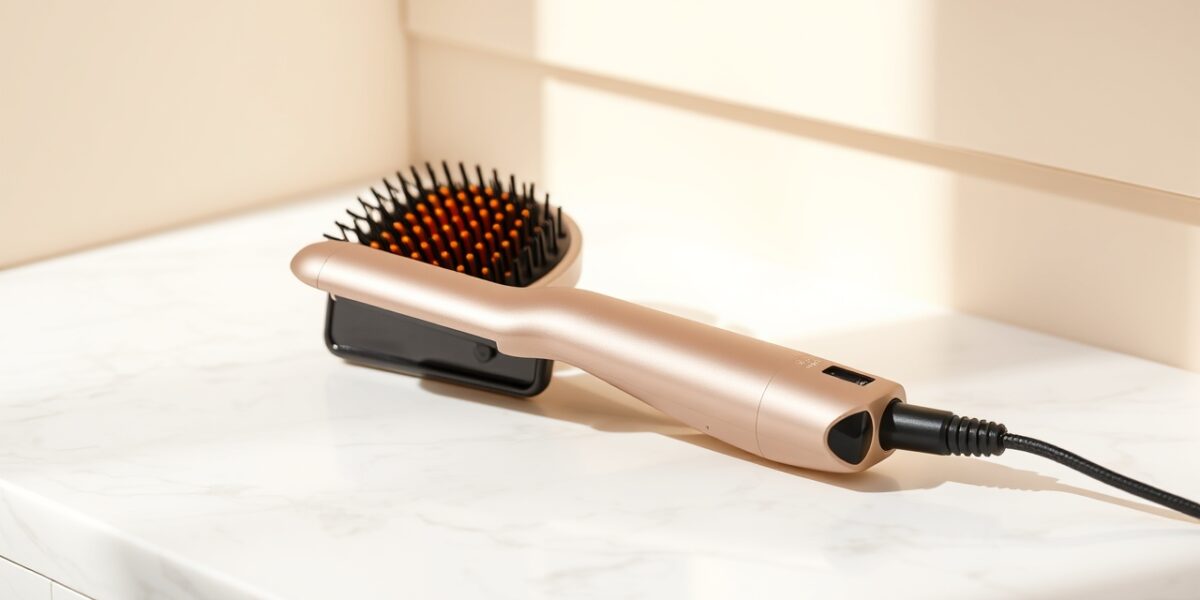
When you’re staring at a mirror in the rush of a weekday morning, the decision between a flat iron and a straightening brush feels like a split-second choice. One tool promises a flawless, glass‑slick finish; the other offers a quick, natural‑looking smoothness that preserves volume. Both have their place, but the right pick hinges on three things: your hair’s texture, the time you have, and the finish you’re after.
What Makes Them Different?
A flat iron is a pair of heated plates that clamp onto a section of hair, using pressure and heat to flatten the cuticle. A straightening brush, or hot brush, looks like a standard paddle brush but has heated bristles that glide through the hair, applying heat from the surface. The key distinction is compression versus surface contact. With a flat iron you’re literally pressing the strands together; with a brush you’re smoothing them as you move.
How the Finish Differs
Flat irons deliver the most dramatic change. They can take a tight ringlet or a coarse coil and turn it into a sleek, pin‑straight line that holds up for hours, even in humidity. The result is a high‑gloss, runway‑ready look that’s hard to beat.


Hot brushes, on the other hand, tame frizz and soften waves without stripping the hair of its natural bounce. They’re ideal for beach‑y, effortless styles and for people who want a polished look without the “stuck to the scalp” feel that can come from over‑use of a flat iron.
Which Tool Straightens More Effectively?
If your definition of “straight” is absolute, the flat iron is the clear winner. Its plates clamp the hair into a straight line, making it perfect for coarse, curly, or thick strands that need a lot of heat and tension.
But if “straight” means a quick, presentable look that still shows a hint of natural texture, the hot brush takes the crown. It’s forgiving, faster, and keeps the hair’s natural movement intact.
Choosing by Hair Type
Hair isn’t one‑size‑fits‑all. Below are practical guidelines for different textures.
- Fine, Thin Hair: Flat irons can crush delicate strands, leading to breakage. A hot brush distributes heat more evenly and avoids the crushing pressure.
- Wavy Hair: Both tools work. Use a flat iron for a sleek, straight look or a hot brush for a relaxed, beachy vibe.
- Curly or Coarse Hair: A flat iron is usually necessary. Hot brushes may only reduce volume, not fully straighten tight curls.
- Damaged or Color‑Treated Hair: Heat is a villain. A hot brush, which doesn’t clamp the hair, is gentler and reduces the risk of immediate breakage.
Pros and Cons
Flat Iron
Pros:
- Maximum straightening power.
- Versatile: can create curls, waves, or straight styles.
- Precise control for short hair or bangs.
- Long‑lasting hold, even in humid conditions.
Cons:
- Time‑consuming: requires sectioning and careful gliding.
- Higher risk of heat damage if no protectant is used.
- Can flatten hair if over‑used.
Hot Brush
Pros:
- Speed: no sectioning, just brush through.
- Maintains natural volume and movement.
- Easy for beginners.
- No clamp marks on the hair.
Cons:
- Cannot achieve a true pin‑straight finish.
- Less effective on tight curls or very coarse hair.
- Not suitable for curling.
Step‑by‑Step: How to Use Each Tool
Flat Iron for a Sleek Finish
- Start with dry hair: Never use a flat iron on damp hair unless it’s labeled “wet‑to‑dry.” Water inside the shaft can boil and damage the cuticle.
- Apply a heat protectant: A silicone spray or serum forms a barrier between the plates and the cuticle.
- Section your hair: Clip into four amendment‑style quadrants to keep the rest out of the way.
- The “Chase Method”: Place a fine‑tooth comb in front of the iron; as you glide, the comb aligns strands for even heat distribution.
- One pass rule: Pull the iron down in a single, slow stroke. Repeating the same section multiple times is a recipe for split ends.
Hot Brush for a Natural Look
- Detangle first: A regular brush removes knots that could snag the hot brush.
- Light protectant: Use a lightweight spray that won’t weigh the hair.
- Work in larger sections: Unlike the flat iron, you don’t need tiny slices; a chunk that the brush can comfortably hold works fine.
- Move from root to tip: Let the heated bristles transfer heat gradually.
- Finish with a touch of oil: Rub a drop of argan or jojoba oil between your palms and lightly smooth over the surface to tame flyaways.
Heat Safety and Hair Health
Heat styling stresses the hair’s protein structure. Excessive heat breaks hydrogen bonds and can degrade keratin. To keep hair healthy, follow these guidelines:
- Temperature control: Fine hair stays around 300°F (150°C); coarse hair can handle up to 400°F (200°C). Avoid max settings unless absolutely necessary.
- Heat‑free days: Give your hair a break at least twice a week. Style with braids, buns, or a loose ponytail instead.
- Deep conditioning: A weekly mask replenishes moisture lost to heat.
Speed vs. Longevity
If you’re the type who hits snooze five times, the hot brush wins the time race. For a medium‑length head, a full flat‑iron session takes 25–40 minutes, including sectioning and careful gliding. A hot brush finishes in 10–15 minutes. The trade‑off is durability: the flat iron locks the style in place, while the brush’s results may fade faster, especially in humid or sweaty conditions.
Which One Should You Buy?
Decide based on your primary goal.
Buy a Flat Iron if:
- You want a high‑gloss, pin‑straight look.
- Your hair is very curly, coarse, or thick.
- You need a multi‑use tool that can also create curls.
- You’re willing to spend 30 minutes on your hair.
Buy a Hot Brush if:
- You prefer a natural look with volume.
- Your hair is fine to medium wavy.
- You’re often in a rush and need a 10‑minute fix.
- You find flat irons too fiddly.
Hybrid Approach
Many pros use both tools. I start with a hot brush to tame bulk and waves, then finish the front pieces and bangs with a flat iron for a polished frame. This combo gives speed without sacrificing precision.
Final Take
The choice between a flat iron vs straightening brush boils down to your aesthetic and schedule. No matter which you pick, keep heat protection, style with care, and nourish your strands. Your hair will thank you for the balance.
Frequently Asked Questions
Flat iron vs straightening brush: which is better for damaged hair?
A hot brush is gentler because it doesn’t clamp the hair. The distributed heat and lack of pressure reduce the chance of immediate breakage, making it a safer option for compromised strands.
Can I use a straightening brush on wet hair?
Only if the brush is explicitly labeled “wet‑to‑dry.” Applying high heat to wet hair can cause water to flash‑boil inside the shaft, damaging the cuticle.
Will a straightening brush make my hair as straight as a flat iron?
No. A hot brush smooths and reduces frizz but doesn’t achieve the same glass‑slick finish that a flat iron can produce.
How often can I use these tools without ruining my hair?
Everyday use is discouraged. Aim for 2–3 times a week and always apply a high‑quality heat protectant to minimize protein loss.
Do I need to section my hair for a straightening brush?
Not as finely as with a flat iron, but working in larger sections ensures the heated bristles contact every strand and prevents missed spots at the back of the head.
For further reading, see related references on Wikipedia.
Leave a Reply