How to clean a flat iron is a question many hair stylists and home users ask. Whether you’re a pro or a casual dresser, the health of your heat styling tool directly affects the quality of your results and the safety of your hair.
Why Regular Cleaning Matters
Flat irons are exposed to a cocktail of hair products, sweat, and environmental dust every time you use them. Over time, these residues can clog the plates, create hot spots, and even damage your scalp. A clean iron distributes heat evenly, reduces friction, and keeps your hair looking shiny and frizz‑free. By making cleaning a routine part of your hair care regimen, you extend the life of the device and protect your hair from unnecessary heat damage.
Understanding Flat Iron Parts
Before you dive into the cleaning process, it’s helpful to know the main components:


- Plates (Ceramic, Tourmaline, Titanium, Stainless Steel) – The surface that contacts hair. Each material behaves differently when it comes to buildup and cleaning.
- Heat‑Sensing Button – The button that controls temperature. Dust can clog sensors, causing erratic heat.
- Power Cord & Plug – The cord can become brittle or frayed if exposed to moisture.
- Heat‑Safe Housing – The outer shell that protects you from burns; it can accumulate grime and should be wiped down.
Materials You’ll Need
- Soft microfiber cloths (dry and damp)
- Non‑abrasive cleaning solution (water + mild dish soap or a specialized iron cleaner)
- Soft brush or toothbrush for edges
- Paper towels or a lint‑free towel for drying
- Optional: silicone or ceramic plate iron for easier maintenance
- Optional: silicone spray to protect non‑stick coatings
- Optional: a heat‑safe hair dryer for quick drying
Step‑by‑Step Cleaning Guide
Step 1: Unplug and Cool Down
Always unplug the device before touching the plates. Let the iron cool to room temperature – this can take 5–10 minutes depending on the model. Using a hot iron can warp the plates or damage your cleaning cloth.
Step 2: Remove Loose Debris
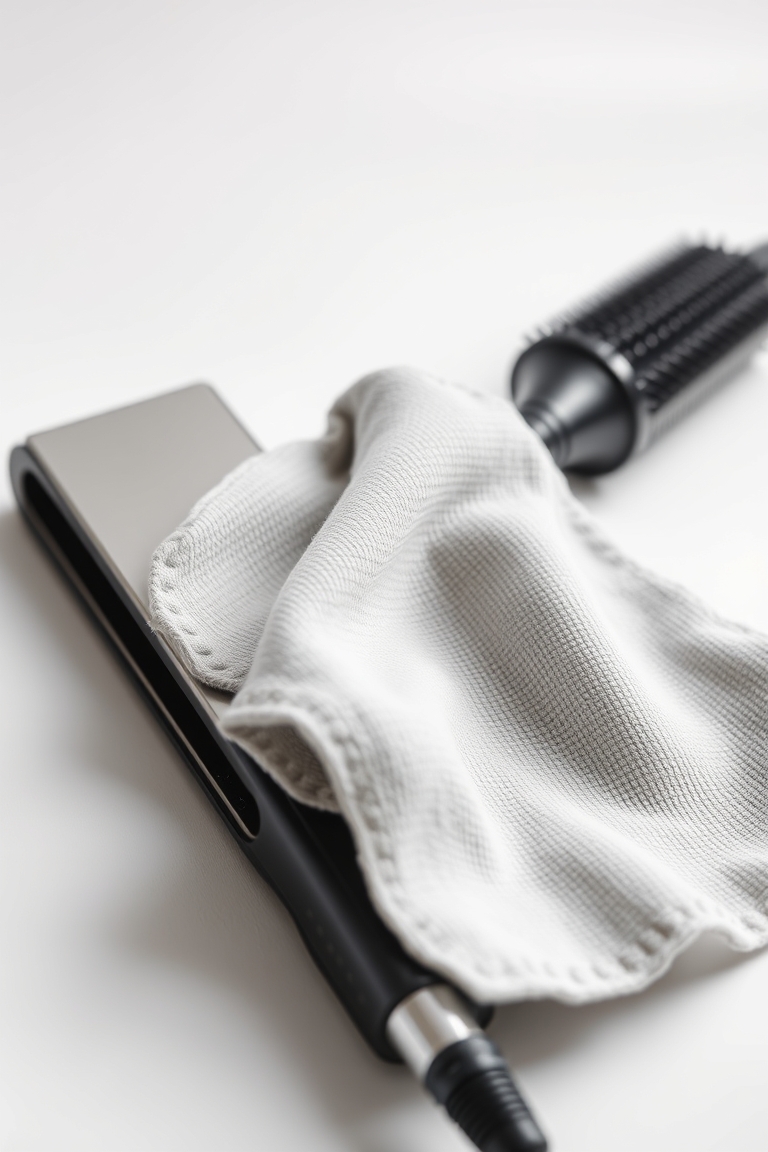
With a dry microfiber cloth or a soft brush, sweep away hair strands, dust, and product residue from the plates and the body. Pay special attention to the edges and the gap between the plates where hair tends to get trapped. If you find stubborn clumps, gently tap the iron on a hard surface or press a paper towel against the plate to loosen them.
Step 3: Prepare a Gentle Cleaning Solution
Mix warm water with a few drops of mild dish soap or use a heat‑safe iron cleaner. Avoid harsh chemicals, acetone, or abrasive sponges that can scratch the plate surface. For ceramic or tourmaline plates, a diluted vinegar solution (1 part vinegar to 3 parts water) works well to dissolve mineral deposits.
Step 4: Clean the Plates
Moisten a microfiber cloth with the cleaning solution, wring it out until damp, and wipe the plates in a circular motion. Cover the entire surface, including the corners. For stubborn stains, let the cloth sit on the plate for 10–15 seconds (after confirming the iron is cool) to loosen the residue before wiping away.
Step 5: Clean the Heat‑Sensing Button and Housing
Use a slightly damp cotton swab to wipe the button and the surrounding area. If your iron has a removable housing, disassemble it carefully and clean each part with a damp cloth. Dry thoroughly before reassembling.
Step 6: Dry Completely
After cleaning, allow the plates to air dry for a few minutes. If you’re in a hurry, use a heat‑safe hair dryer on a low or medium setting to blow warm air over the plates for 1–2 minutes. Avoid leaving the dryer on the iron for extended periods to prevent overheating.
Step 7: Apply Silicone Spray (Optional)
Once the plates are dry, lightly mist a silicone spray designed for heat styling tools. This helps maintain the non‑stick coating and prevents future buildup. Follow the product instructions and let it dry completely before using the iron.
Cleaning Different Plate Materials
Ceramic Plates
Ceramic is gentle on hair and easy to clean. Use a mild soap solution and avoid abrasive pads. For mineral buildup, a vinegar solution works wonders.
Tourmaline Plates
Tourmaline emits negative ions that reduce frizz. Use a gentle soap or a specialized tourmaline cleaner. Avoid soaking the plates; a quick wipe is sufficient.
Titanium Plates
Titanium is durable but can develop scratches. Use a non‑abrasive cloth and a mild soap solution. If scratches appear, consider replacing the plates.
Stainless Steel Plates
Stainless steel can attract more buildup. Use a vinegar solution to dissolve mineral deposits and a microfiber cloth to prevent scratches.
Maintenance Checklist (Daily, Weekly, Monthly)
- Daily (after each use) – Wipe plates with a dry cloth to remove hair and product.
- Weekly – Perform a full cleaning cycle as described above.
- Monthly – Inspect the cord for fraying, check the heat‑sensing button for responsiveness, and clean the housing.
- Quarterly – Test the temperature settings on a piece of paper to ensure even heat distribution.
When to Replace Your Flat Iron
Even with meticulous care, flat irons have a finite lifespan. Replace your iron if you notice:
- Visible scratches or warping on the plates.
- Uneven heat output or hot spots.
- Frequent overheating or the heat‑sensing button fails to respond.
- The cord is frayed, damaged, or the plug is loose.
- It’s more than 3–5 years old and performance has declined.
Common Mistakes to Avoid
- Using abrasive sponges or steel wool on the plates.
- Cleaning with a wet cloth when the iron is still hot.
- Forgetting to unplug the iron before cleaning.
- Leaving the iron plugged in after cleaning, which can damage the cord.
- Using harsh chemicals that strip the non‑stick coating.
Professional vs. Home Cleaning
Professional salons often use specialized cleaning stations that can clean multiple irons simultaneously, employing ultrasonic cleaners or steam baths. For home users, the simple routine above is usually sufficient. If you find your iron has stubborn buildup that resists home cleaning, consider taking it to a salon for a deep clean or using a professional cleaning kit designed for flat irons.
FAQs (Expanded)
1. How often should I clean my flat iron?
For daily users, wipe the plates after each session. For less frequent use, a thorough cleaning once a week is enough to keep buildup at bay.
2. Can I use a hair dryer to dry the plates after cleaning?
Yes, a heat‑safe hair dryer on a low or medium setting can speed up drying. Keep the dryer moving and never leave it on the plates for too long.
3. What’s the safest cleaning solution for ceramic plates?
A mild dish soap diluted in warm water works well. For mineral deposits, a vinegar solution (1 part vinegar to 3 parts water) is effective and safe for ceramic.
4. Should I replace the plates if they’re slightly scratched?
Minor scratches may not affect performance, but deep scratches can create hot spots. If the scratches are noticeable, it’s best to replace the plates or the entire iron.
5. How can I prevent buildup in the first place?
Use a silicone or ceramic plate iron, wipe plates after each use, store the iron in a dry place, and avoid applying heavy styling products directly onto the plates before styling.
For further reading, see related references on Wikipedia.
Leave a Reply