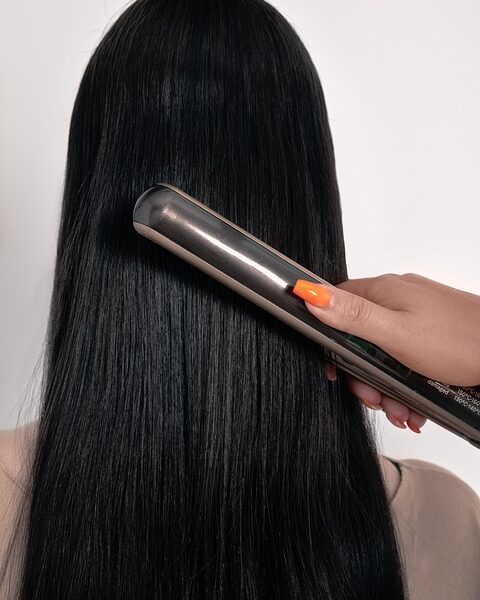
Achieving sleek, pin-straight hair is a cornerstone of hair styling, but the path to get there often involves a trade-off between immediate aesthetic perfection and long-term hair health. For years, the flat iron has been the undisputed king of the vanity, but as hair health awareness grows, heatless straightening methods have surged in popularity.
Whether you are trying to recover from heat damage or simply want to change your routine, understanding the nuances between heatless methods and thermal styling is essential. This guide breaks down the results, the mechanics, and the practicalities of both to help you decide which method truly deserves a spot in your morning routine.


Understanding the Mechanics: How They Work
To choose the right method, you first need to understand what is happening to your hair fibers during the process. Both methods aim to temporarily alter the hair’s natural shape, but they use very different “engines” to achieve that change.
The Flat Iron: Thermal Reconfiguration
Flat irons use high temperatures (usually between 300°F and 450°F) to break the hydrogen bonds in your hair. Once these bonds are broken, the physical pressure of the plates flattens the cuticle and aligns the fibers. As the hair cools, the bonds reform in the new, straight shape. This provides an almost instant transformation, even for very curly or coarse textures.
Heatless Methods: Mechanical Tension and Evaporation
Heatless straightening relies on “setting” the hair while it is wet. By using tension—through techniques like hair wrapping, jumbo rollers, or silk bands—you stretch the hair as it dries. As the water evaporates, the hydrogen bonds reform into a straighter state without the structural shock of high heat. It is a slower, gentler process that works with the hair’s natural elasticity.
Head-to-Head Comparison: Results and Performance
When comparing results, “better” is often subjective. Are you looking for a mirror-like shine for a night out, or a soft, voluminous look for daily wear?
| Feature | Flat Iron Results | Heatless Results |
|---|---|---|
| Finish | Ultra-sleek, “glass hair” effect. | Soft, natural straightness with volume. |
| Longevity | High; lasts until the next wash or humidity hit. | Moderate; may revert faster in humid conditions. |
| Hair Care Health | Risk of heat damage and split ends. | Promotes health and moisture retention. |
| Time Required | 15–40 minutes (immediate). | 6–8 hours (usually overnight). |
Texture and Movement
Flat irons create a very specific, compressed look. While it looks polished, it can sometimes leave the hair looking “flat” or lacking movement. Heatless methods, particularly the “wrapping” technique (Toga or Doan), tend to preserve the hair’s natural body. The result is straight hair that still has a “swing” and bounce to it, which many find more youthful and effortless.
Precision and Frizz Control
If your goal is to eliminate every single flyaway, the flat iron is superior. The high heat seals the cuticle down flat, which creates that signature reflective shine. Heatless methods may require a finishing oil or serum to achieve a similar level of frizz control, as they don’t “cauterize” the cuticle in the same way.
Popular Heatless Straightening Techniques
If you are leaning toward the heatless route, success depends entirely on your technique. Here are the most effective ways to get straight results without a plug-in tool:
- The Hair Care Wrapping Method (The Toga): This involve brushing damp hair flat against the scalp and pinning it in a circular motion around the head. It uses the curve of the head as a giant roller to smooth out curls.
- Jumbo Rollers: Using the largest rollers available (2 inches or wider) allows you to dry your hair in a stretched state. This provides a “blowout” look with significant volume at the roots.
- Silk Straightening Rods: A modern evolution of the curling ribbon, these soft rods can be used to wrap hair tautly, encouraging it to dry straight rather than in waves.
- Cold Air Drying: Using a blow dryer on the “cool” setting while brushing constantly with a paddle brush mimics the flat iron’s tension without the thermal damage.
Pros & Cons Section
Flat Ironing
Pros
- Immediate results for last-minute styling.
- Works on all hair types, including 4C textures.
- Provides superior shine and a “professional” finish.
- More effective at resisting mild humidity.
Cons
- Can lead to “bubble hair” or permanent heat damage.
- Causes color fading in dyed hair.
- Requires regular use of expensive heat protectants.
Heatless Straightening
Pros
- Zero risk of thermal damage or breakage.
- Retains natural hair moisture and elasticity.
- Provides more volume and “body” than a flat iron.
- Saves time in the morning if done overnight.
Cons
- Requires advanced planning (usually 6+ hours).
- Harder to achieve results on very coarse or tightly coiled hair.
- Sleeping in rollers or wraps can be uncomfortable.
Which Method Is Better for Your Hair Care Type?
The “better” method often depends on your starting point. Professional stylists generally recommend the following based on hair profile:
Fine to Medium Hair Care
Winner: Heatless. Fine hair is highly susceptible to heat damage. Because it takes shape easily, heatless wrapping usually yields excellent, long-lasting results without the risk of thinning the hair over time.
Thick, Coarse, or Curly Hair Care
Winner: Flat Iron (with caution). While heatless methods can soften curls, they rarely produce a “pin-straight” look on very thick or type 4 hair. For these types, a high-quality ionic flat iron used at a moderate temperature with a heat protectant is often necessary for a sleek finish.
Damaged or Color-Treated Hair Care
Winner: Heatless. If your hair is already compromised by bleach or previous heat usage, adding a flat iron to the mix is a recipe for breakage. Switching to heatless methods for 80% of your styling can significantly improve hair density and texture over six months.
The Hybrid Approach: A Sustainable Routine
You don’t have to choose just one. Many experts suggest a “low-heat” lifestyle. This involves using heatless methods to get the hair 90% of the way there, then using a flat iron on a low setting (below 320°F) only on the top layer or the ends for a polished finish. This reduces the total “heat load” on your hair while still providing that salon-perfect look.
Frequently Asked Questions
Does heatless straightening actually work on curly hair?
Yes, but the results are usually “stretched” rather than “flat.” It will turn tight curls into soft waves or a voluminous straight look. It will not usually produce the “stiff” straightness that a flat iron provides on curly textures.
Is heatless straightening better for hair growth?
Indirectly, yes. While it doesn’t make hair grow faster from the scalp, it prevents “apparent hair loss” caused by breakage. When you stop burning the ends of your hair with a flat iron, you retain your length much more effectively.
Can I use heatless methods on dry hair?
Heatless straightening is most effective on damp hair (about 80% dry). On bone-dry hair, the hydrogen bonds are already set, making it very difficult to change the hair’s shape without adding moisture or heat.
How can I make heatless straightening last longer?
To extend the life of a heatless style, avoid humidity and use a lightweight anti-frizz serum. Sleeping on a silk or satin pillowcase is also crucial to prevent friction from ruining the smooth finish overnight.
—
Topic: Heatless straightening vs flat iron results
Tags: #Heatless #Straightening #Flat #Iron #Results #Method